
The Long Tail (2)

   28 oktober 2004    @marcoderksen

We place every source - be it from TV, Cable, Radio - on to a curve, and order them by number of viewers. For example, Yahoo.com and NBC TV could appear on the left hand side, while fringe Web sites like JibJab.com could appear on the right. We can draw some interesting segmentation of this curve as a result. For a Web site operator, it is easier to draw advertisers to one large site with millions of viewers than it is for a thousand sites each with a thousand viewers. However, for example, compared to eBay with hard-to-find products and Google with hard-to-find information, the market opportunity could be very significant for monetizing - or drawing advertising or easy-to-use payment solutions to - the thousands of disparate sources of published content.

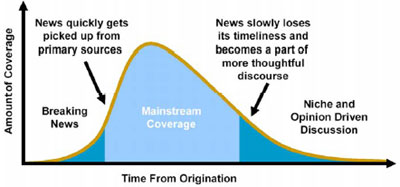
Of ze zich hebben laten inspireren door het artikel van Chris Anderson weet ik niet, maar Mary Meeker, Brian Pitz en Brian Fitzgerald (allen Morgan Stanley), hebben een interessante studie gedaan naar de mogelijke effecten van weblogs, RSS en contentsyndicatie op nieuwsverspreiding (pdf).

Een absolute aanrader om te lezen!

Gepost in:

Over de auteur

The Long Tail (2)

, Upstream

Oprichter/partner Upstream, Marketingfacts, Arnhem Dichtbij, SportNEXT, TravelNext, FoodNext, RvT VPRO, Bestuurslid Luxor Live, docent HAN Zie voor details: Upstream.nl

2 Reacties

The Long Tail (2)

Frank

In dit kader is het leuk om te melden dat plm 7 weken na de start van podcasting er nu een groot artikel in de NY Times staat. Het lijkt alsof ook de "time to break" van weblogs naar mainstream steeds sneller gaat. Een nog steiler lijntje in de grafiek wellicht?

geplaatst op 29-10-2004 om 06:56 uur

The Long Tail (2)

Marco Derksen, Upstream

Ben het met je eens dat de "time-to-break" steeds korter wordt. 7 weken vind ik dan eigenlijk nog niet eens bijzonder snel.

geplaatst op 29-10-2004 om 08:22 uur

Plaats een reactie

  • Maximaal 5000 karakters. Basis HTML tags zoals <a> zijn toegestaan.